
India’s digital marketing industry is heading into a major shift. ChatGPT usage among professionals under 30 has grown faster in India than in almost any other market, and the platform is now building an advertising layer on top of that audience. For brands and agencies working in digital marketing services in India, this matters more than most people are treating it.
At Kiefads, we have been tracking this closely since the first code references to ad infrastructure appeared in the ChatGPT Android app in late 2025. Here is what we know, what is still uncertain, and what Indian brands should do about it right now.
How ChatGPT Ads Work: The Core Mechanics
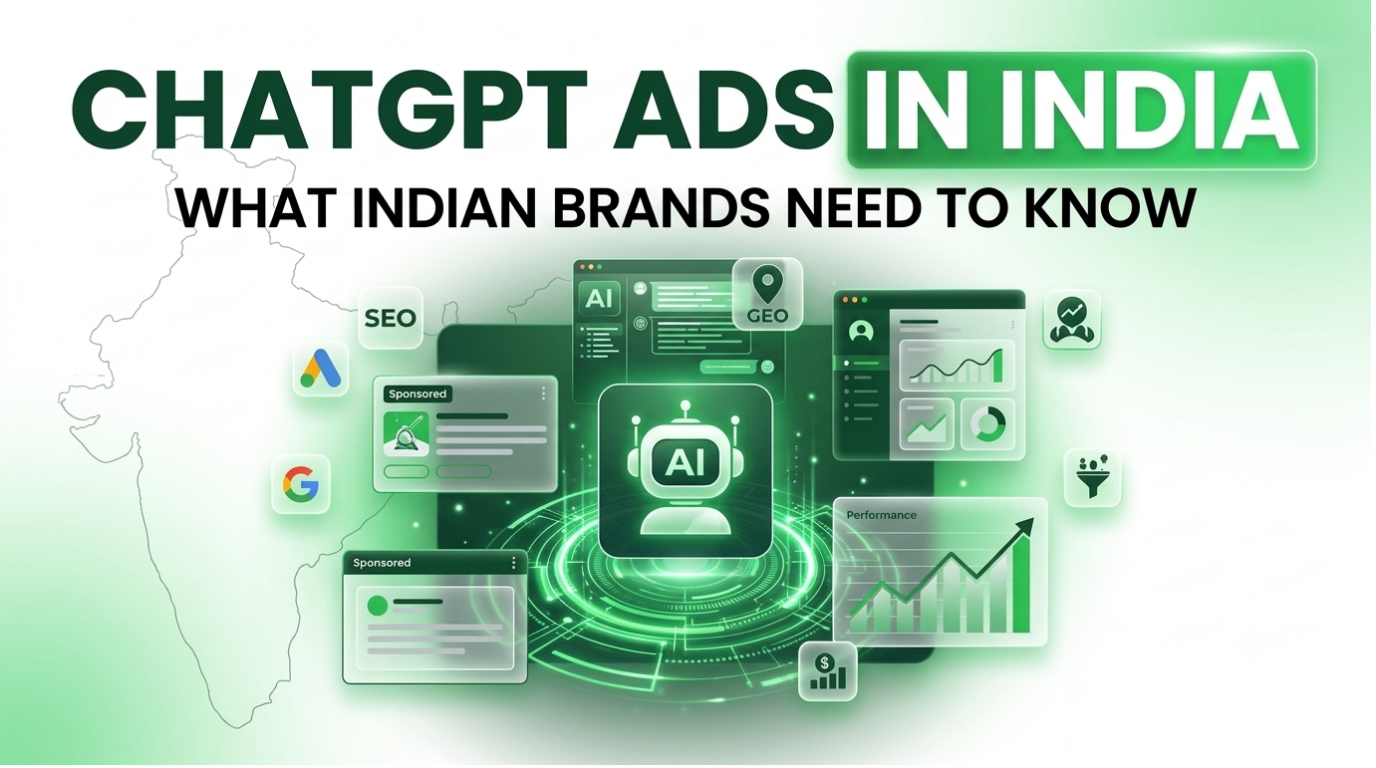
ChatGPT ads began testing on January 16, 2026, initially limited to US-based free-tier users. The format is contextual text placement. When a user asks a question with commercial relevance, a clearly labelled Sponsored box appears at the bottom of the AI’s response.
OpenAI describes the principle behind this as Answer Independence:
- The AI generates its response from its training and real-time data.
- The ad system separately decides whether a relevant sponsored placement fits.
- Advertisers cannot pay to change or influence the organic answer.
What advertisers can buy is a placement alongside the answer, at the moment of highest commercial intent, when someone is already looking for a solution. Compare that with a banner ad that interrupts someone reading the news. A sponsored placement beside an answer to “which CRM is best for a small business in India?” reaches a person who is ready to decide.
The initial rollout required seven-figure advertiser commitments and was invite-only, starting with the D2C vertical. It is not a self-serve platform yet, but every major ad platform in history began this way before opening up to smaller advertisers.
Why ChatGPT Ads Matter for Digital Marketing in India
India is one of the largest ChatGPT markets in the world by user volume, and the user base skews young. By OpenAI’s own data, nearly half of all messages on the platform come from users under 26. That is the core demographic for most growth-stage Indian brands, from D2C and fintech to edtech, SaaS and services.
For this audience, ChatGPT is increasingly the first stop for:
- Product research and comparisons
- Agency and vendor selection
- B2B software and service evaluation
- Learning how to do something before buying a solution
Searches that once began on Google, such as “best digital marketing services in India”, “social media agency in Mumbai” or “how to grow a brand on Instagram in India”, now often start as ChatGPT conversations. Either your brand appears in those answers or it does not.
India has more than 950 million internet users, a mobile-first population and a generation that turns to AI before it turns to a search engine. The ChatGPT advertising opportunity lands on top of that. And the advertising layer is arriving on top of an organic visibility question that most Indian brands have not started answering.
ChatGPT Ads vs Google Ads: What Indian Marketers Should Expect
| Factor | Google Ads | ChatGPT Ads (early stage) |
|---|---|---|
| User behaviour | Keyword search, scanning results | Conversational, detailed questions |
| Ad format | Text, shopping, display, video | Labelled sponsored box below the answer |
| Access | Self-serve, any budget | Invite-only, high commitments at launch |
| Targeting signal | Keywords, audiences, location | Conversation context and intent |
| India availability | Fully available | Check current status; broad access expected later |
The takeaway is not that ChatGPT replaces Google. Intent is moving toward conversational interfaces, and brands need presence in both.
The More Urgent Priority: GEO Visibility
Broad access to ChatGPT ads for advertisers outside the US is expected later than the US rollout, so confirm the current India status before planning budgets. What is accessible today is Generative Engine Optimization (GEO): structuring your content so AI systems cite and recommend your brand in their organic answers.
GEO does not replace SEO. It extends it. Strong technical SEO, helpful content and authority still matter, and GEO adds a layer focused on how large language models find, understand and quote your content.
Three structural changes have the highest impact on how often a brand appears in AI-generated responses:
- Schema markup. Industry testing suggests that properly marked-up content gets noticeably higher AI visibility, often cited in the range of 30 to 40 percent. Use Organization, Service, Product, FAQPage and Article schema.
- FAQ sections and direct-answer paragraphs. Put a clear, concise answer in the first lines of a page, then expand. AI systems extract content that answers the question directly.
- Original data. Proprietary statistics, case study results and India-specific research give AI systems something worth citing.
These changes serve Google SEO and LLM visibility at the same time, which makes them one of the most efficient investments a brand can make this year.
At Kiefads, we run GEO audits for clients. The pattern is consistent: most brands have significant AI visibility gaps, and many can be closed without a major budget through content restructuring, schema implementation and third-party citation building.
What Indian Brands Should Do in the Next 90 Days
1. Run a manual AI visibility audit
Ask ChatGPT, Perplexity and Google AI Overviews the questions your ideal customer would ask. Use India-specific phrasing and city names, such as “best CA firm in Bengaluru for startups” or “affordable SEO agency in Delhi NCR”. Document whether your brand appears, which competitors appear, and which sources are cited. The baseline costs nothing and takes about 30 minutes. Without it, every other decision is guesswork.
2. Restructure your highest-traffic pages for AI extraction
- Put a direct answer at the top of every key page.
- Add FAQ sections to all service and product pages.
- Include original statistics or case study data wherever possible.
- Use clear H2 and H3 headings that mirror real customer questions.
- Add structured data and keep it validated.
This lifts both Google rankings and AI visibility at the same time.
3. Build third-party citations
AI systems lean on sources they trust. Get listed and mentioned on reputable Indian industry publications, review platforms, directories, podcasts and community forums. Consistent brand information across the web makes your brand easier for AI to recognise and recommend.
4. Get on the ChatGPT ads waitlist
Being early to a new ad platform is one of the few genuine first-mover advantages left in digital advertising. Brands that understood Google Ads in 2004 built positions that took years to displace. History does not repeat, but it does rhyme loudly.
5. Prepare your creative and landing pages now
When access opens, the winners will have conversation-friendly ad copy, fast mobile landing pages and clear conversion tracking ready. Write and test intent-based messaging on existing channels first.
Where Kiefads Fits In
Kiefads helps Indian brands show up where their customers are actually looking, whether that is on social media, in search results or inside an AI-generated answer. Our work covers AI visibility audits, GEO content strategy, SEO and search marketing, and paid media planning for brands that want to lead this shift rather than follow it.
Your customers are already asking AI about your category. Is your brand in the answer? Talk to Kiefads about an AI visibility audit and a GEO roadmap built for the Indian market.
Frequently Asked Questions
Will ChatGPT ads be available for Indian brands in 2026?
ChatGPT ads began as a US-only test for free-tier users and were initially invite-only. OpenAI has not committed to a broad, self-serve launch for Indian advertisers at the time of writing, so check OpenAI’s latest announcements. Brands should join the waitlist and prepare their content, tracking and creative now.
Do ChatGPT ads influence what the AI recommends organically?
No. Under OpenAI’s Answer Independence principle, the AI generates its response independently, and the ad system separately decides whether to show a labelled sponsored placement. Advertisers cannot pay to change the organic answer, so earning organic mentions depends on content quality, authority and structure.
What is GEO and how does it relate to traditional SEO for Indian brands?
Generative Engine Optimization is the practice of structuring and distributing content so AI tools such as ChatGPT, Perplexity and Google AI Overviews cite and recommend your brand. It builds on SEO fundamentals and adds schema markup, direct-answer formatting, original data and third-party citations. For Indian brands, it also means covering regional queries, city-level searches and the way Indian users phrase their questions.
How much do ChatGPT ads cost?
OpenAI has not published a public rate card for India. In the early US test, advertisers reportedly needed seven-figure commitments, which suggests premium pricing at launch. Pricing for Indian advertisers will likely change as the platform opens to smaller brands, so use the waiting period to build GEO visibility, which costs far less.