
Introduction: Social Media Is Now a Core Revenue Channel for Indian Businesses
India’s social media landscape has moved well beyond posting festive greetings and product photos. For most Indian businesses today, social media is a main source of leads, sales and customer relationships. Whether you run a D2C brand in Mumbai, a real estate firm in Gurugram, a coaching institute in Kota or a boutique in Jaipur, your customers are discovering, comparing and buying through their smartphones.
India is one of the world’s largest and most mobile-first digital markets. Affordable data, low-cost smartphones and a young, multilingual population have made platforms like Instagram, YouTube, Facebook, WhatsApp and LinkedIn part of daily life. Customers now expect personalised experiences, content in their own language and fewer steps between “I like this” and “I bought this.”
To stay competitive in this market, businesses must go beyond vanity metrics like likes and follower counts. They need to adapt to short-form video, social commerce, AI-driven personalisation, evolving advertising rules and data privacy laws. At Kiefads, we help Indian brands navigate these shifts with strategy that is creative, compliant and focused on measurable revenue.
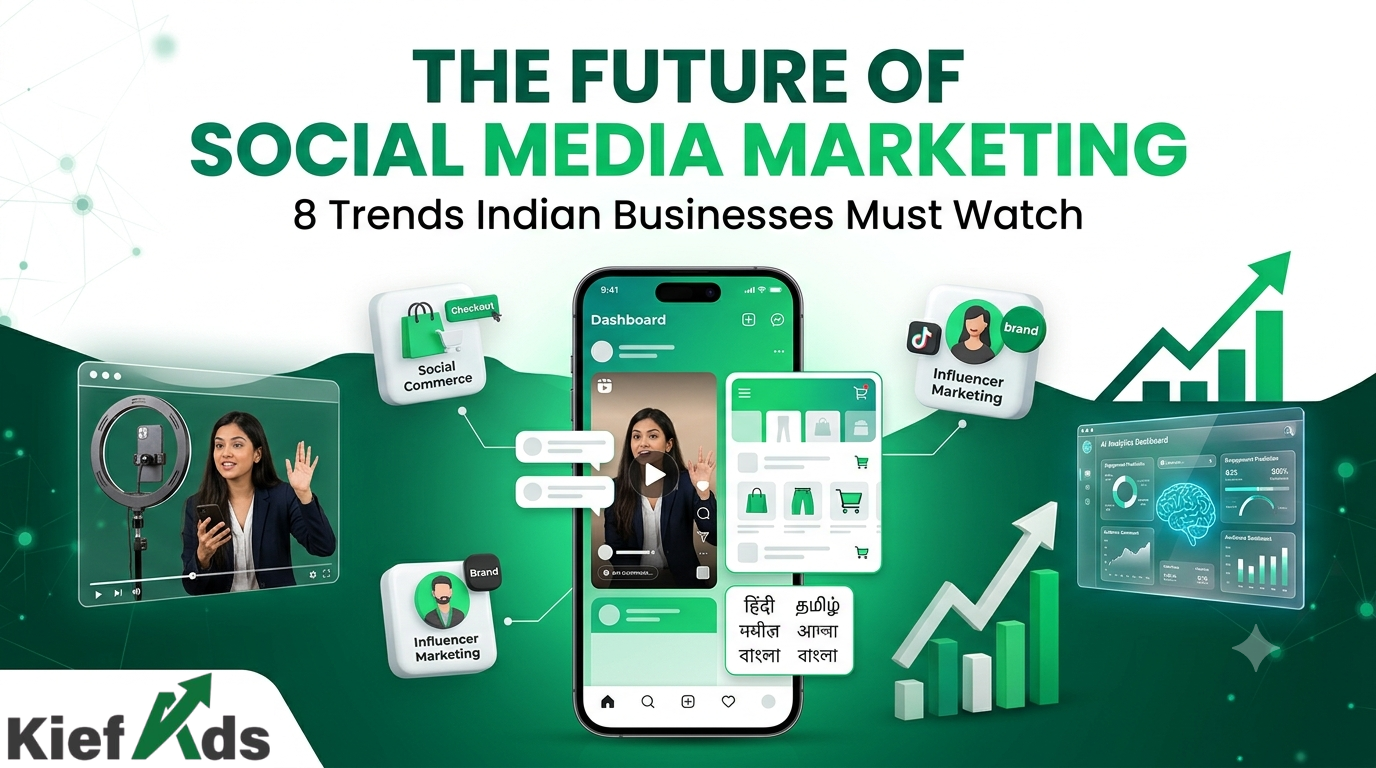
This guide covers the eight trends that will shape social media marketing in India and how your business can prepare.
8 Essential Social Media Trends Shaping Indian Businesses
A multi-platform strategy is now essential. Whether you operate in Delhi NCR, Bengaluru, Hyderabad or a growing tier 2 city, these are the changes to build into your plan.
1. Advertising Compliance and Influencer Disclosure Rules
Indian social media marketing is becoming more regulated. The Advertising Standards Council of India (ASCI) has influencer advertising guidelines requiring clear disclosure when content is sponsored. The Central Consumer Protection Authority (CCPA) has also issued guidelines against misleading advertisements and for endorsements, and violations can carry penalties. Sectors like finance and health face additional scrutiny, with financial influencers needing to follow SEBI rules.
What this means for you: Use clear labels such as “#ad,” “#sponsored” or the platform’s paid-partnership tag. Verify every claim before publishing. Put written agreements in place with influencers so everyone understands their disclosure responsibilities. Compliance protects your brand from penalties, takedowns and reputational damage.
(Rules change from time to time, so always check the latest ASCI, CCPA and sector-specific guidelines before launching a campaign.)
2. Social Commerce and Seamless In-App Shopping
Social platforms are turning into digital storefronts. Instagram and YouTube offer product tagging, shopping features and live shopping formats, and WhatsApp has become a powerful sales and support channel through product catalogues, click-to-chat ads and automated replies. Many Indian shoppers also discover products through creator videos before they ever visit a website.
What this means for you: Shorten the path from discovery to purchase. Tag products in posts and videos, build catalogues, use click-to-WhatsApp ads and make sure your payment options (UPI especially) are simple and trusted. The fewer steps a buyer needs to take, the higher your conversion rate.
3. The Shift Toward Micro-Influencer Performance Partnerships
Indian brands are moving away from expensive celebrity endorsements toward micro and nano influencers with 5,000 to 100,000 engaged followers. These creators often have strong trust within a specific city, language community or niche, from budget travel and home cooking to fitness and personal finance.
What this means for you: Partner with creators whose audiences match your customers. Shift from flat fees to performance-linked deals using tracked links, discount codes and affiliate models. Micro-influencers often deliver better engagement and conversion at a fraction of the cost of big names, which suits Indian SMEs and startups well.
4. Dominance of Short-Form Video Content
Short-form video is the most powerful format on social media today. Instagram Reels and YouTube Shorts capture a huge share of attention in India, and regional short-video platforms are also popular. (TikTok remains banned in India, so your video strategy should focus on the platforms that are available.)
What this means for you: Replace static, ad-like posts with vertical, fast-paced videos that hook viewers in the first three seconds. Use trending audio carefully, add subtitles (many people watch on mute) and tailor content to local culture, festivals and humour. Repurpose one video across Reels, Shorts and Facebook to get more from your production effort.
5. Hyper-Personalisation Driven by AI Insights
Artificial intelligence is changing how brands plan and run social campaigns. With the support of an experienced social media marketing agency in India, businesses can use AI tools to analyse audience behaviour, build segments automatically, test multiple ad creatives and write copy variations suited to different customer groups.
What this means for you: Use AI to speed up research, content ideation, reporting and ad testing, but keep human creativity and brand judgement at the centre. Audiences can quickly spot generic, robotic content. The brands that win will pair AI efficiency with authentic voice and local understanding.
6. Multilingual and Culturally Localised Content
India has 22 scheduled languages and enormous regional diversity. A single English-only content calendar cannot reach everyone. Many first-time internet users prefer Hindi, Tamil, Telugu, Marathi, Bengali, Gujarati, Punjabi and other languages, and they respond strongly to content that reflects their own culture.
What this means for you: Build content calendars that mix English with Hindi and relevant regional languages. Localise for festivals such as Diwali, Eid, Navratri, Onam, Pongal and Baisakhi, and avoid direct translation that misses cultural nuance. Brands that speak to people in their own language earn deeper trust, especially in tier 2 and tier 3 cities where digital adoption is growing fast.
7. First-Party Data Capture Through Social Lead Workflows
Privacy is a growing concern worldwide, and India now has the Digital Personal Data Protection (DPDP) Act, 2023, which shapes how businesses collect and use personal data. At the same time, advertisers are losing access to some third-party tracking data.
What this means for you: Build your own customer database through lead forms, polls, quizzes, WhatsApp opt-ins, giveaways and gated content. Always collect data with clear consent and a transparent purpose. Strong first-party data keeps your CRM useful, improves targeting and reduces dependence on platform tracking. Consult a legal professional to make sure your data practices meet current requirements.
8. Integration of Social Media with SEO
Social platforms are increasingly used as search engines, especially by younger Indians who search Instagram, YouTube and other apps for recommendations, reviews and tutorials. Search is no longer limited to Google.
What this means for you: Add relevant keywords to captions, video titles, descriptions, hashtags, alt text, profile bios and subtitles. Align your social content with your website’s SEO strategy so that both channels support each other. A joined-up approach improves discoverability, brings in organic traffic and builds topical authority across platforms.
Strategic Shift: Traditional vs. Next-Generation Social Media Marketing
The way social media is managed has changed significantly. Modern Indian brands need interactive, data-driven and compliance-conscious systems instead of one-way broadcasting.
| Campaign Dimension | Traditional Approach (Legacy Model) | Next-Generation Approach (Future-Proofed) | Commercial Strategic Value |
|---|---|---|---|
| Content Strategy | Broadcast-style promotion and static branded images | Interactive short-form video, live streams and creator-led content | Higher engagement and better algorithmic reach |
| Regulatory Standing | Unmonitored influencer deals and informal posting | Adherence to ASCI and CCPA guidelines, clear ad disclosures and DPDP-aware data practices | Lower risk of penalties, takedowns and reputational harm |
| Sales Attribution | Driving traffic to external sites through link-in-bio clicks | In-platform shopping features, product tagging and click-to-WhatsApp journeys | Smoother buying experience and higher conversion rates |
| Language and Reach | English-only, metro-focused messaging | Multilingual, regionally localised content | Wider reach across tier 2 and tier 3 markets |
Common Social Media Marketing Mistakes Indian Brands Should Avoid
- Ignoring disclosure rules: Undisclosed paid promotions can lead to complaints and penalties.
- Chasing followers instead of customers: A large audience that never buys has little commercial value.
- Copying global trends without localising: What works in the West may not suit Indian audiences.
- Overlooking WhatsApp: It is one of the most effective channels for conversations and conversions in India.
- Posting inconsistently: Irregular activity weakens reach and trust.
- Skipping measurement: Without tracking leads, sales and cost per acquisition, you cannot tell what is working.
How to Prepare Your Business for the Future of Social Media in India
- Audit your current presence across platforms, content quality and compliance.
- Define clear goals such as leads, sales, app installs or store visits, not just followers.
- Build a short-form video pipeline with a regular posting schedule.
- Set up social commerce and WhatsApp journeys to reduce friction in buying.
- Create a multilingual content plan aligned to your audience and festivals.
- Collaborate with micro-influencers on performance-based terms.
- Capture first-party data responsibly with consent.
- Track ROI using cost per lead, conversion rate, customer lifetime value and return on ad spend.
How Kiefads Can Help You Grow on Social Media
Kiefads is a digital marketing partner for Indian businesses that want social media to deliver real results. Our approach combines:
- Data-driven social media strategy tailored to your audience and industry
- Scroll-stopping short-form video and creative content
- Influencer and creator collaborations with clear performance tracking
- Paid social campaigns built for lead generation and sales
- Multilingual and regional content planning
- SEO-aligned social media optimisation
- Compliance-aware campaign planning and transparent reporting
Whether you are a startup, an SME or an established enterprise, Kiefads helps you move from posting for visibility to marketing for growth.
Frequently Asked Questions
Q1. What is the future of social media marketing in India?
The future points toward short-form video, social commerce, AI-assisted personalisation, regional language content, micro-influencer partnerships and stricter compliance with advertising and data privacy rules.
Q2. Which social media platforms are best for businesses in India?
It depends on your audience. Instagram and YouTube are strong for B2C and D2C brands, LinkedIn suits B2B, Facebook still reaches wide demographics, and WhatsApp is excellent for conversations and customer service.
Q3. Is influencer marketing regulated in India?
Yes. ASCI and the CCPA have guidelines requiring clear disclosure of paid or sponsored content, and certain sectors have additional rules. Brands and influencers should follow the latest guidelines.
Q4. How can small businesses benefit from social media marketing?
Small businesses can reach local customers affordably through Reels, WhatsApp, local micro-influencers and targeted ads, often with a smaller budget than traditional advertising requires.
Q5. How do I measure social media ROI?
Track metrics tied to business outcomes: leads generated, cost per lead, conversion rate, sales attributed to social channels, customer acquisition cost and return on ad spend, alongside engagement.
Q6. Why is regional language content important?
Many Indian users, especially outside the metros, prefer content in their own language. Regional content builds trust, improves engagement and expands your reach.
Final Thoughts
India’s digital arena is advanced, competitive and constantly changing. Creativity combined with multichannel commerce, personalisation and compliant, participatory engagement is how brands will survive and grow. Businesses that embrace short-form video, make shopping simple, work with local creators and follow advertising and privacy rules will outperform those that still rely on one-way broadcasting.
Choosing the right social media marketing agency in India can give your brand the competitive edge needed to turn social engagement into measurable, sustainable revenue.
Ready to future-proof your social media strategy? Connect with Kiefads today and start building a brand that grows on every screen.