
Table of Contents
- What Is Web Design?
- Why Is Website Design Important? The Real Reasons
- 15 Web Design Benefits Every Business Should Know
- Why Use a Professional Web Designer?
- How Web Design and SEO Work Together
- Choosing the Right Platform for Your Website
- 9 Signs Your Website Needs a Redesign
- What to Expect From a Professional Web Design Service
- Frequently Asked Questions
- Conclusion
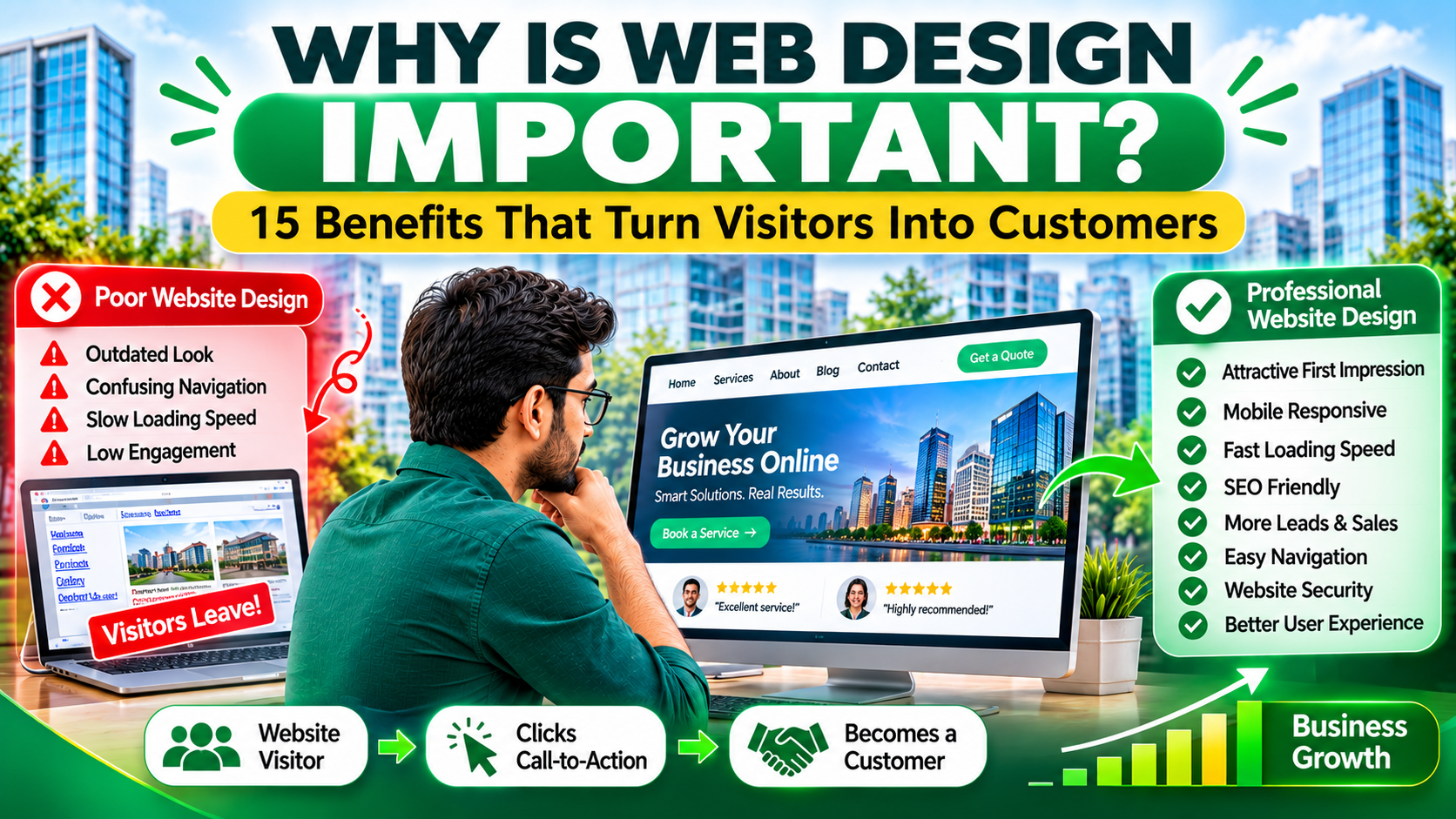
Why is web design important? Because your website is the first place most customers meet your business. They decide in a few seconds if they will stay or leave. Before anyone calls you, books a visit or adds a product to their cart, they look at your site. If it loads slowly, looks old or is hard to use, they go back to Google and pick a competitor. You never even know you lost them.
This is the hard truth about every website. It is either working for you all day and night, or it is working against you. There is no middle ground.
The good news is that the opposite is also true. A well-designed website builds trust before you say a word. It answers questions, removes doubts and shows visitors what to do next. It ranks better on search engines, works well on phones and gives all your marketing one strong home base.
At Kiefads, we help businesses build websites that look great and bring in real customers. In this guide, you will learn:
- What web design is and how businesses use it
- Why website design matters for trust, sales and search rankings
- 15 clear benefits of professional web design
- Why a professional web designer is better than a DIY builder
- How web design and SEO work together on WordPress, Shopify and Magento
- Warning signs that your website is costing you money
- What to expect when you hire a web design service
What Is Web Design?
Web design is the planning and creation of everything a visitor sees and does on a website. It includes layout, colors, fonts, images and buttons. But it is more than looks. Good web design also decides how pages are organized, how fast they load, how easily people find what they need and how smoothly they go from “just looking” to “ready to buy.”
Think of a real shop. The paint and the sign matter, but so do the aisles, the lights, the checkout desk and how easy it is to find a helper. Web design is all of that, but online.
A professional web design project usually includes:
- Visual design: your brand, colors, fonts, images and overall style
- User experience (UX): how people move around your site and how few clicks it takes to act
- User interface (UI): the buttons, menus, forms and every item people tap or click
- Responsive design: layouts that fit phones, tablets and computers
- Content structure: page order, headings and words that speak to your customer
- Technical base: clean code, fast speed, strong security and SEO readiness
Common Uses of Web Design
Businesses use web design in many ways:
- Getting leads. Service businesses like clinics, law firms and contractors use websites to get calls, quote requests and bookings.
- Selling products. Online stores use design to show products, build trust and make checkout simple.
- Building trust. A neat site shows you are a real and reliable business.
- Teaching customers. Blogs, guides and FAQs answer questions before people call.
- Helping current customers. Help pages, portals and booking tools reduce support calls.
- Hiring staff. Career pages show job seekers what it is like to work with you.
- Running campaigns. Landing pages turn ad and email clicks into sales or leads.
- Ranking on Google. A well-built site is the base for good SEO.
In short, web design is not just decoration. It is the system that turns attention into income.
Why Is Website Design Important? The Real Reasons
Website design is important because it controls three things every business needs: first impressions, trust and action.
1. People Judge Your Business Very Fast
Research from Carleton University found that people form an opinion about how a web page looks in about 50 milliseconds. That is faster than a blink. In that moment, visitors are not reading your “About Us” page. They are reacting to spacing, colors, pictures and how neat everything feels.
If their first feeling is “this looks old” or “this looks messy,” many will leave before they learn what makes you great. A professional design passes this quick test so your message gets a chance.
2. Design Helps People Decide If They Can Trust You
The Stanford Web Credibility Project found that about three out of four people judge a company’s trust level by its website design. Think about your own habits. Would you enter your card details on a site that looks like it was made in 2009? Would you trust a doctor whose website has broken images and spelling mistakes?
Your customers think the same way. Clean design, matching brand style, real photos, visible reviews and clear contact details all say: “This business is real and safe.”
3. Design Decides If Visitors Take Action
Traffic alone does not pay your bills. What matters is how many visitors call, book, buy or fill in a form. Design shapes every step:
- Where your call-to-action button sits and if it stands out
- How many fields your contact form has
- If prices, services and next steps are easy to find
- How fast the page loads on a phone with a weak signal
Small changes add up. A button moved higher on the page, a form cut from ten fields to four, or a page that loads two seconds faster can raise your results. Over thousands of visitors, this can mean the difference between growing and staying stuck.
Why Web Design Matters for Mobile Users
Most web traffic now comes from phones. Google has reported that more than half of mobile visitors leave a page that takes over three seconds to load. If your site is slow, hard to tap or makes people pinch and zoom, you lose most of your audience. Mobile-first design is no longer a bonus. It is the basic standard.
15 Web Design Benefits Every Business Should Know
Here are the biggest benefits of web design. You can see them in your traffic reports, your inbox and your bank account.
1. A Strong First Impression
Your homepage is your digital shop front. A clean, modern look tells visitors that you are professional and up to date. This first feeling affects how they see your prices, your reviews and your whole brand.
2. More Trust and Credibility
Trust is the money of online business. Good design builds it with matching brand style, real team photos, client logos, reviews, security badges and clear policies. People who trust you are more willing to share their email, call you or pay.
3. Better Search Engine Rankings
Google likes websites that are fast, mobile friendly, safe and easy to use. These all come from good design. Clean code, a clear page structure and proper heading tags help Google understand your content. Design and SEO work as a team, so every site we build at Kiefads is ready for on-page SEO from the start.
4. More Leads and Sales
This is the benefit most owners care about. Smart design puts calls to action where people are ready to act, removes problems from forms and checkouts, and guides visitors step by step. The result is a higher conversion rate, which means more customers from the same traffic.
5. A Great Mobile Experience
Responsive design makes your site look and work well on every screen. Buttons are easy to tap, text is easy to read and menus fold neatly. Since many of your visitors use phones, this one benefit can change your results.
6. Faster Loading Speed
Professional designers shrink images, clean up code and use light layouts, so pages open quickly. Speed affects bounce rate, sales, ad costs and rankings. A fast site simply earns more than a slow one.
7. Consistent Branding Everywhere
Your website should look and sound like the rest of your business, from your logo and business cards to social media and emails. A designer builds one clear brand style so people know you wherever they find you. Brands that feel the same everywhere are easier to remember.
8. Standing Out From Competitors
In busy markets, many companies offer similar services at similar prices. Your website is one of the few places where you can show why you are different. Custom design, sharp messages and proof of results help people choose you.
9. Lower Bounce Rate and Longer Visits
When a site is neat and easy to explore, people stay. They click a second page, then a third. Longer visits give you more time to win them over, and they also send good signals to search engines.
10. Better Access for Everyone
Accessible design means good color contrast, text descriptions for images, keyboard-friendly menus and easy-to-read fonts. It helps people with disabilities and older users, widens your audience and can lower legal risk.
11. Stronger Security
Professional builds include SSL certificates, safe hosting, updated plugins and protected forms. A hacked site can damage years of trust and may be flagged by Google. Good web design includes the hidden technical work that keeps you and your customers safe.
12. Easy Updates and Room to Grow
A well-built site uses a flexible content management system. You can add pages, blog posts, products or services without starting over. As your business grows, your website grows with it.
13. Better Results From All Your Marketing
Every ad, social post, email and flyer sends people to your website. If your site is weak, part of every marketing dollar is wasted. A high-converting website makes all your other marketing work harder.
14. Useful Data and Insights
Modern websites include analytics, conversion tracking and heatmaps. You can see which pages get visits, where people leave and which channels bring paying customers. This helps you make smart choices instead of guesses.
15. Long-Term Return on Investment
A website is not a cost that ends at launch. It is an asset that works 24 hours a day, every day of the year, with no sick days. A professional site can bring leads and sales for years, which makes it one of the best investments a small business can make.
Why Use a Professional Web Designer?
Drag-and-drop builders promise a nice site in one afternoon. For a hobby blog, that may be fine. For a business that needs leads and sales, a basic template often falls short.
DIY Website vs. Professional Web Designer
| Factor | DIY Website Builder | Professional Web Designer |
|---|---|---|
| Design | Common template used by thousands | Custom design built for your brand and customers |
| Strategy | You guess what visitors want | Layout planned around buyer behavior |
| SEO | Basic settings, often set wrong | Clean code, site structure and on-page SEO built in |
| Speed | Heavy themes and plugins slow it down | Optimized images, code and hosting |
| Mobile | “Responsive” but often awkward | Tested on real devices |
| Your time | Many hours of learning and fixing | You focus on your business |
| Results | Looks fine, but few sales | Built to bring calls, leads and sales |
Top Benefits of Hiring a Web Designer
- Skills that take years to learn. A pro knows layout, color, fonts, user behavior and conversion rules. They know which mistakes cost money because they have seen them many times.
- A plan, not just a look. Good designers ask about your goals, ideal customers and competitors first. Then every page is built to lead visitors to one clear action.
- More free time. Your time is better spent running your business, not fighting with page builders at midnight.
- Fewer costly mistakes. Broken links, slow pages, missing tracking and poor mobile layouts are common on DIY sites. Fixing them later often costs more than doing it right at first.
- Ongoing support. When something breaks or needs a change, you have an expert to call.
That is what our website design services at Kiefads are made to deliver: a custom site, a clear plan and a team that stays with you after launch.
How Web Design and SEO Work Together
A beautiful site that nobody can find is like a billboard in the desert. And ranking on page one does not help if visitors land on a confusing page. The best results come when design and SEO are planned together from day one.
Design Choices That Affect Rankings
- Site structure: A clear order of pages and categories helps Google crawl your site and understand each page.
- Page speed and Core Web Vitals: Google checks loading speed, layout stability and response time. Your choices about images, fonts and scripts affect these scores.
- Mobile-first indexing: Google mainly uses the mobile version of your site to rank it. Weak mobile design means weak rankings.
- Headings and content layout: Proper H1, H2 and H3 tags, short sections and internal links help both readers and search engines.
- User engagement: When visitors stay longer and view more pages, it shows your site is useful.
On-page SEO fine-tunes titles, meta descriptions, headings, image alt text, internal links and content, so every page you design is also built to rank. For steady growth after launch, Kiefads can also support you with SEO services matched to your goals and budget.
Choosing the Right Platform for Your Website
The platform you use affects both design freedom and SEO power. These are the three we use most.
WordPress runs a large part of the web, and for good reason. It is flexible, easy to update and great for service businesses, blogs and content-rich sites. With the right theme and setup, a WordPress site can be fast, safe and very search friendly.
Shopify is a top choice for online stores that want something reliable and simple to manage. Good Shopify design focuses on product photos, clear collections, trust signs and smooth checkout. With Shopify SEO, your collection pages, product text and site speed are tuned so shoppers can find your products.
Magento (Adobe Commerce) is made for large stores with big catalogs, advanced filters and custom needs. Its power comes with SEO challenges, such as duplicate URLs and crawl problems from filter pages. A skilled team can fix these technical issues so large stores can rank well.
Whichever platform you pick, the lesson is the same: design with search in mind from the start, and you will save time, money and lost rankings later.
9 Signs Your Website Needs a Redesign
Not sure if your site is helping or hurting? Check this list. If you say yes to three or more, your website may be costing you customers.
- It has not been redesigned in three years or more.
- It looks or works badly on a phone.
- Pages take more than three seconds to load.
- You get steady traffic, but few calls or form fills.
- You feel embarrassed to send people to it.
- Competitor websites look more modern than yours.
- You cannot easily change text, photos or services yourself.
- It does not show on page one of Google for your main services.
- Your brand, services or prices changed, but your site did not.
A redesign is not about following trends. It is about removing the problems that stop interested people from becoming customers. Often, moving from an old site to a smart, modern one gives the biggest jump in leads a business sees all year.
What to Expect From a Professional Web Design Service
Hiring a web design agency should feel clear and organized. Here are the steps a good web design service follows, and the process we use at Kiefads.
- Discovery and strategy. We learn about your business, goals, ideal customers and competitors. We decide what success looks like, such as more calls, bookings or online sales.
- Sitemap and wireframes. We plan every page and sketch key layouts, so the structure is solid before visual design starts.
- Visual design. Our designers create mockups with your brand colors, fonts, images and calls to action. You review them and share feedback.
- Content and SEO setup. We organize your text, images and headings and add on-page SEO so every page is ready to rank.
- Development. We build the approved design on the right platform. It is responsive, fast and secure.
- Testing. We test on different browsers and devices, check speed, fix broken links and make sure forms and tracking work.
- Launch. Your site goes live, with redirects set up to protect any rankings you already have.
- Support and growth. After launch, we watch performance, make improvements and help you keep growing.
The best web design projects are partnerships. You bring knowledge of your business and customers. Your designer brings the plan and skill to turn it into a website that sells.
Frequently Asked Questions About Web Design
Why is web design important for small businesses?
Small businesses compete with bigger brands that have bigger budgets. A professional website levels the field. It makes a small company look established, answers customer questions all day and night, and brings in leads without a large sales team. For many small businesses, the website is their best salesperson.
What are the main benefits of web design?
The main benefits are a stronger first impression, more trust, better search rankings, more leads and sales, a great mobile experience, faster loading, consistent branding and long-term return on investment. Together, they turn your website from an online brochure into a growth tool.
Why use a professional web designer instead of a website builder?
A builder gives you a template. A professional gives you a plan. Designers build your site around how your customers think and buy, add SEO and speed from the start, and avoid the common mistakes that make DIY sites weak. You also save time and get an expert to call when you need help.
How long does it take to design a website?
Most small business websites take four to eight weeks from start to launch. Bigger online stores or custom projects can take longer. The time depends on the number of pages, the features you need and how fast content and feedback are shared.
How much does professional web design cost?
The cost depends on the size of the site, custom features, online store needs and ongoing support. A better question is what the website will earn. A site that brings in even a few extra customers each month can pay for itself quickly. Contact Kiefads for a quote based on your goals.
Does web design affect SEO?
Yes, a lot. Site speed, mobile friendliness, page structure, headings, internal links and user engagement all come from design, and they all affect rankings. That is why we build SEO into every website project instead of adding it at the end.
How often should I redesign my website?
Most businesses gain from a full redesign every three to four years, with small improvements in between. Technology, design standards and customer needs change fast, and a site that looked fresh a few years ago can start to look old and perform poorly.
Conclusion: Your Website Should Be Your Best Salesperson
So, why is web design important? Because your website shapes how customers see you, if they trust you and if they choose you. It affects your Google rankings, the return on every marketing dollar and how many visitors become paying customers. The benefits of web design are not just ideas. They show up as more calls, more bookings, more sales and a stronger brand.
A DIY template can get you online, but a professional web designer gets you results. The right partner builds a site that looks great, loads fast, ranks well and guides every visitor toward becoming a customer.
Why Business Owners Choose Kiefads
At Kiefads, we do not just design websites. We build growth systems that mix smart design, clear content that converts and proven SEO. Here is what you get when you work with us:
- A custom design built around your brand and your customers
- Mobile-first, fast and secure development
- SEO built in from day one, on WordPress, Shopify or Magento
- Clear communication and a team that supports you after launch
Ready to Turn Your Website Into a Customer Magnet?
Your competitors are already investing in their websites. Every day your site underperforms is a day of leads you will never get back. Let’s change that.
Contact Kiefads today for a free consultation. We will review your current site, show you where you may be losing customers and share a plan to fix it. Your next customer is searching for you right now. Let’s make sure they find you and choose you.