
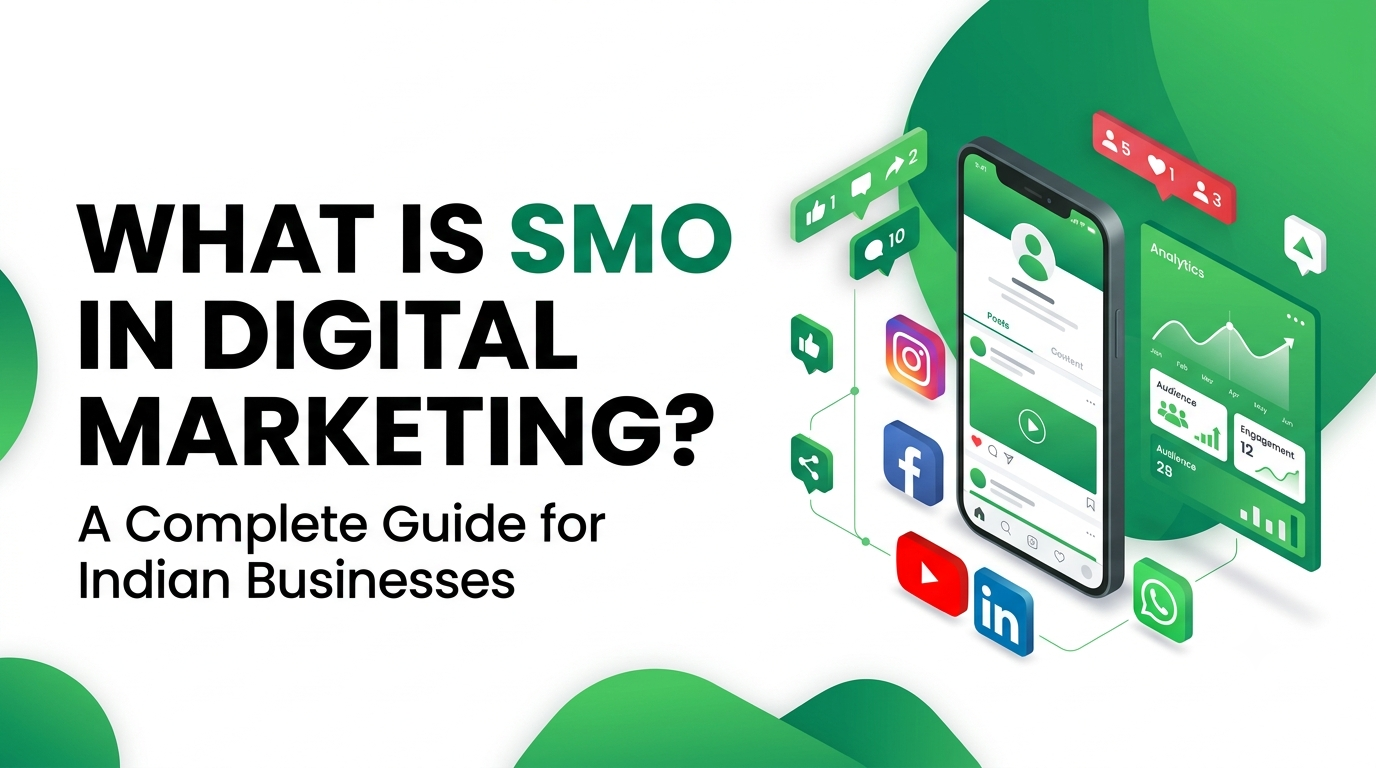
SMO stands for Social Media Optimization: the practice of improving a business’s social media profiles, content and engagement so that the right people can find the brand, trust it and take action. In a country where hundreds of millions of people use Instagram, Facebook, YouTube, WhatsApp and LinkedIn every day, SMO has become a basic part of any serious digital marketing plan.
This guide explains what SMO means, how it works, which platforms matter most for Indian audiences, and how businesses of every size can build a social media presence that actually brings enquiries and sales. It is written for business owners, marketers and beginners who want a clear, practical understanding of SMO in digital marketing.
What Is SMO in Digital Marketing?
SMO, or Social Media Optimization, is the process of making a business’s social media presence more visible, more useful and more engaging. It covers everything from the way a profile is set up to the way posts, videos, captions and hashtags are created and shared.
In India, people do not only use social media to chat with friends. They use it to discover brands, watch product demos, read comments from other buyers, compare prices and message businesses directly. A shopper in Delhi may check a brand’s Instagram page before buying. A business owner in Pune may look at a company’s LinkedIn page before agreeing to a meeting. If the profile is incomplete, outdated or inactive, that first impression is lost.
SMO fixes this. It helps a business:
- Present clear, accurate and consistent information on every platform
- Publish content that the target audience wants to see, save and share
- Be easier to discover through keywords, hashtags and location details
- Start conversations with customers instead of only broadcasting messages
- Send interested people to the website, WhatsApp number or contact form
SMO mainly focuses on organic (unpaid) growth. It is about the quality, relevance and discoverability of your social media presence, not about buying reach through ads.
SMO full form and meaning
The full form of SMO is Social Media Optimization. In simple words, SMO means “making your social media accounts work better for your business.” A well-optimized account is complete, active, easy to understand and built around what the audience cares about.
Why Is SMO Important for Businesses in India?
SMO matters in India because social media is where Indian customers spend their time and where they decide whom to trust. India is a mobile-first market. Most people access Instagram, YouTube, Facebook and WhatsApp on their phones, often in their own language, and often while they are already thinking about what to buy or which service to hire.
Several Indian market realities make SMO especially useful:
- Discovery happens on social platforms. Many people now search for brands, restaurants, salons, coaching classes, clothing and services directly on Instagram and YouTube, not only on Google.
- Trust is built through visible activity. Indian buyers often judge a brand by its comments, reviews, customer stories and how quickly it replies. A silent profile suggests a silent business.
- Regional language content connects better. Posts in Hindi, Hinglish, Tamil, Telugu, Marathi, Bengali, Punjabi and other languages can reach audiences that English-only content misses.
- Festivals and seasons drive demand. Diwali, Holi, Eid, Raksha Bandhan, Navratri, Onam, Pongal, wedding season and the cricket calendar all create strong content and campaign moments.
- WhatsApp is the sales channel. For many Indian businesses, the real conversion happens in a WhatsApp chat. SMO connects social posts to WhatsApp so interested people can enquire in one tap.
- Cost control matters. Small and medium businesses can build awareness through organic social media without a large advertising budget.
In short, SMO helps a business show up where its customers already are, in a way that feels credible and easy to act on.
What SMO can do for your business
- Improve social media visibility
- Increase likes, comments, shares and saves
- Build brand awareness among the right audience
- Bring qualified traffic to your website
- Encourage calls, messages and enquiries
- Improve communication with customers
- Support SEO, content marketing and paid campaigns
How Does SMO Work?
SMO works as a repeating cycle: understand the audience, optimize the profiles, publish useful content, engage with people, measure results and improve. It is not random posting. It needs a plan and regular adjustment.
- Understand the business and the audience. Know who your customers are, what they search for, which languages they use and which platforms they prefer.
- Optimize the social media profiles. Complete every field and keep your information consistent.
- Create and publish relevant content. Match formats and topics to what your audience values.
- Engage. Reply to comments and messages, ask questions and join conversations.
- Track performance. Check which posts bring reach, engagement, clicks and enquiries.
- Improve. Do more of what works and change what does not.
Main Components of SMO
1. Social media profile optimization
The profile is the front door of your brand, so it must be complete and accurate. Important details include:
- Business name
- Business description
- Website link
- Phone number, email and WhatsApp link
- Location or service area
- Business category
- Working hours, where relevant
- Profile photo and cover image
Keep the name, logo, colours and contact details consistent across all platforms. If your brand is written differently on each platform, people find it harder to recognise and trust you.
2. Bio optimization
The bio gives people a quick idea of what you do in a few seconds. Write it for people first and search second. A good bio states what you offer, who you serve and what the visitor should do next, such as “Message us on WhatsApp” or “Visit our website”.
A digital marketing company, for example, can mention services such as SEO, PPC, social media marketing, content marketing and online reputation management. Avoid stuffing the bio with unrelated keywords.
3. Content optimization
Content is the heart of SMO. Useful, interesting and well-presented content earns reach and trust. Common formats include:
- Images and graphics
- Reels and short videos
- Carousels
- Educational posts and tips
- FAQs
- Customer stories and testimonials
- Product or service information
- Company updates
- Behind-the-scenes content
The right format depends on the business. A fashion brand may lean on photos and short videos. A B2B company may do better with LinkedIn posts, industry insights and case studies. A local service business can share customer experiences, service demonstrations and practical tips.
4. Hashtag optimization
Hashtags help organise content and make it easier to discover on platforms that support hashtag search. Use hashtags that are relevant to your industry, product, service, language or location. A business serving Delhi NCR might combine topic hashtags with location hashtags.
Quality matters more than quantity. Avoid adding many random hashtags, and avoid pasting the same set on every post. Choose them to match each piece of content.
5. Keyword use on social media
Social platforms now work partly like search engines, so keywords in your profile name, bio, captions, video titles, descriptions and on-screen text can help people find you. If you offer SEO services, terms like “SEO services” and “search engine optimization” should appear naturally. Do not stuff keywords. The text should still sound like a human wrote it.
6. Image optimization
Use clear images that match your brand and communicate the message quickly. Product businesses should show the product clearly. Service businesses can use graphics that explain a process, benefit or tip. Use the correct size and format for each platform, and make sure text is readable on a small phone screen. Blurry or cluttered images reduce engagement.
7. Video optimization
Video is now one of the strongest formats on Instagram, YouTube and Facebook. Use short videos, reels, tutorials, product demonstrations, customer videos and explainers. Each video should have a clear purpose and a strong first few seconds. Add captions or subtitles, because many people watch with the sound off. Not every video should be a sales pitch; give viewers something useful.
8. Engagement
SMO is not only about publishing. Answer relevant comments and messages promptly, ask questions, run polls and start discussions. Customer comments also reveal what people like, what confuses them and what they want next.
9. Social sharing
Make it easy for people to share your content. People share what they find useful, funny or relevant to a friend or colleague, so create content worth passing on. For blog articles on your website, add share buttons for the platforms your audience uses.
10. Connecting social media with your website
Your website and social profiles should support each other. Link your website in every bio, link your social profiles from your website, and share blogs and landing pages through posts. For example, if you publish a detailed guide on your website, create a short post or reel on the main point and direct interested people to the full article.
Best Social Media Platforms for SMO in India
You do not need to be on every platform. Pick the two or three where your customers are most active and do them well.
| Platform | Best for | Content that works |
|---|---|---|
| Fashion, food, beauty, lifestyle, D2C brands, local businesses | Reels, carousels, stories, product photos, customer posts | |
| Local businesses, communities, events, older audiences | Posts, groups, short videos, offers, event pages | |
| B2B companies, IT, consulting, recruitment, professional services | Case studies, industry insights, company news, thought leadership | |
| YouTube | Education, how-to content, product demos, long-term search visibility | Tutorials, explainers, reviews, YouTube Shorts |
| WhatsApp Business | Lead handling, customer support, order updates | Catalogue, quick replies, broadcast updates, click-to-chat links |
| X (Twitter) | News, announcements, customer service, brand conversation | Short updates, threads, replies, trending topics |
| Home decor, fashion, wedding, craft and DIY ideas | Idea pins, boards, product images |
Regional and vernacular platforms such as ShareChat can also help brands that want to reach audiences in regional languages. Check where your own customers are before deciding.
A simple rule: a local clothing store should start with Instagram and Facebook, a B2B software company with LinkedIn and YouTube, and a restaurant with Instagram and Google Business Profile.
SMO vs SEO vs SMM: What Is the Difference?
SMO improves your social media presence, SEO improves your visibility in search engines, and SMM is the wider activity of marketing through social media, including paid ads. They are different, but they work best together.
| SMO | SEO | SMM | |
|---|---|---|---|
| Full form | Social Media Optimization | Search Engine Optimization | Social Media Marketing |
| Main focus | Improving profiles, content and engagement | Ranking the website in Google and other search engines | Promoting the business through social media, organic and paid |
| Where it works | Social platforms | Search engines and the website | Social platforms |
| Main traffic type | Organic social traffic | Organic search traffic | Organic and paid social traffic |
| Typical activities | Profile setup, bio, hashtags, content, engagement | Keywords, on-page SEO, content, backlinks, technical fixes | Campaigns, ads, influencer work, community management |
| Speed of results | Gradual, builds with consistency | Gradual, builds over months | Paid can be quick; organic is gradual |
How SMO and SEO work together
A business can publish an SEO-optimized blog on its website and then share it on LinkedIn, Facebook or Instagram. The blog can attract people from search engines, while the social posts reach people who never searched for it. Together, the two channels bring visitors through different routes.
How SMO and SMM differ
In simple words, SMO means improving your social media presence, while SMM means marketing your business through social media. SMM can include organic marketing, paid advertisements, influencer marketing, content promotion, community management and social media campaigns. SMO is one part of a complete social media marketing strategy.
Benefits of SMO
When done consistently, SMO gives a business seven clear advantages.
- Better social media presence. A complete, professional profile helps people understand your business at a glance.
- More brand awareness. Regular, useful content helps new people discover you.
- Higher engagement. Relevant content encourages likes, comments, shares and saves.
- More website traffic. Posts, bio links and stories can send interested users to your website or landing pages.
- Better customer communication. Comments and messages give you a direct line to your audience.
- Support for SEO. Social media helps promote your website content and bring visitors to it.
- Stronger brand trust. An active, informative and responsive profile builds a better impression, especially with first-time buyers.
SMO for Different Types of Businesses in India
The right SMO approach depends on your business type, audience, location and budget.
SMO for small businesses
Small businesses can benefit from SMO even with a limited budget. Start with one or two platforms where your customers are active instead of trying to be everywhere. A local clothing store can focus on Instagram and Facebook. A tuition centre can use Facebook and YouTube. A home-based food brand can use Instagram and WhatsApp Business.
SMO for local businesses
Local businesses can use SMO to connect with people in their own city or neighbourhood. Add your location naturally in the bio and captions, share customer experiences, announce local offers, post about new services and tag your area. SMO works well alongside local SEO and a complete Google Business Profile. People who search for a business in their city will often check its Instagram or Facebook page before they call or visit.
SMO for B2B businesses
LinkedIn is usually the strongest platform for B2B companies that want to reach business owners, professionals and decision makers. B2B businesses can share:
- Industry updates and company news
- Case studies and customer success stories
- Product information and educational content
- Industry tips and thought leadership
- Employee and culture updates
Content should focus on the problems and interests of the target buyer, not only on the company.
SMO for e-commerce businesses
E-commerce brands can use social media to show products and talk to customers. Useful content includes product photos and videos, new arrivals, customer reviews, unboxing and demonstration videos, buying tips, festival offers and frequently asked questions. Add shopping links and a clear call to action, but do not make every post a sales advertisement. Helpful and entertaining content keeps people following you.
SMO for service businesses
Service businesses depend heavily on trust. Customers want to know who you are before they call. A well-managed profile with service details, testimonials, tips and answers to common questions helps them decide. A digital marketing company, for example, can share educational posts about SEO, PPC, social media marketing and online reputation management to show real knowledge.
Common SMO Mistakes to Avoid
Most weak social media results come from a handful of avoidable mistakes.
- Posting without a plan. Random posts rarely build momentum. A simple monthly content calendar keeps you consistent.
- Using too many or irrelevant hashtags. Relevant hashtags help; long lists of unrelated ones do not.
- Ignoring comments and messages. If people take time to ask a question, reply. Slow replies lose leads, especially on WhatsApp and Instagram DMs.
- Posting only promotional content. If every post is an ad, people stop paying attention. Mix education, proof and entertainment with offers.
- Inconsistent branding. Different logos, names and contact details across platforms confuse people.
- Poor-quality images and videos. Blurry or badly designed creatives make a business look careless.
- Ignoring regional language and festivals. Missing local festivals and language preferences means missing easy relevance in India.
- Buying fake followers. A large number of inactive followers does not bring customers and can hurt engagement rates.
- Not checking analytics. Without data, you cannot tell which content works.
How to Create an SMO Strategy: Step by Step
A practical SMO strategy for an Indian business can follow nine steps.
- Understand your audience. Find out who your customers are, their age group, city, language, interests, problems and preferred platforms.
- Choose the right platforms. Focus on where your audience is active instead of trying to use everything.
- Optimize your profiles. Update the name, bio, website link, contact details, WhatsApp link, location and category.
- Create useful content. Plan around customer questions, industry topics, products, services, festivals and seasonal demand.
- Use relevant keywords. Add the terms your customers search for to the profile and captions naturally.
- Use suitable hashtags. Pick relevant ones for each platform and each post.
- Engage with your audience. Reply to comments and messages quickly, and start conversations.
- Track performance. Review reach, engagement, website visits and enquiries each month.
- Improve continuously. Use the data to repeat what works and drop what does not.
Important SMO Metrics to Track
The most important metric depends on your goal. Choose a few that match what you want, rather than tracking everything.
| Business goal | Metrics to watch |
|---|---|
| Brand awareness | Reach, impressions, follower growth, profile visits |
| Engagement | Likes, comments, shares, saves, engagement rate |
| Website traffic | Link clicks, website visits from social, bounce rate |
| Lead generation | Messages, enquiries, form fills, calls, WhatsApp chats, leads |
| Customer care | Response time, sentiment of comments, resolved queries |
How SMO Works With Other Digital Marketing Channels
SMO is one part of a wider digital marketing strategy, and it performs best when the other channels support it.
- SMO and content marketing. Content marketing creates useful content; SMO distributes and optimizes it on social media. One detailed blog can become a problem-focused post, a quick tip, an explainer video and a final post that sends people to the full article.
- SMO and SEO. SEO brings people from search engines, while SMO helps the same content reach people on social platforms.
- SMO and ORM. Social media is where customers post questions, complaints and praise. Active management helps you notice these conversations and respond well, which supports Online Reputation Management.
- SMO and paid social media. SMO improves your organic presence, while paid advertising reaches a selected audience. A strong organic post can later be promoted with ads to widen its reach.
- SMO and PPC, email and analytics. PPC gives paid visibility, email keeps customer relationships warm, and analytics shows which combination is working.
When these activities are planned together, each one makes the others more effective.
Role of a Digital Marketing Agency in SMO
A digital marketing agency can handle the planning, creative work and day-to-day management that many businesses find hard to do in-house. The work may include profile optimization, content planning, graphic and video creation, posting, hashtag and keyword research, community engagement and performance reporting.
Before hiring any agency, a business should be clear about its goals, whether that is brand awareness, website traffic, engagement or lead generation, and should understand exactly what is included in the service.
SMO Services by Kiefads
Kiefads provides digital marketing solutions for businesses across India that want to strengthen their online presence. SMO can be offered as part of a wider social media and digital marketing strategy built around the client’s goals, audience, location and budget.
With Kiefads, SMO work can focus on:
- Optimizing social media profiles and bios for clarity and consistency
- Planning and creating useful, audience-focused content
- Using relevant keywords and hashtags naturally
- Increasing engagement through timely replies and community management
- Connecting social media activity with the company’s website and other marketing channels
- Tracking performance and improving the strategy over time
Businesses can also combine SMO with SEO, content marketing, PPC, ORM and other digital marketing services from Kiefads, depending on their marketing goals. The right mix depends on the business type, target audience, city or region, and budget.
Frequently Asked Questions About SMO
What is SMO in digital marketing? SMO stands for Social Media Optimization. It is the process of improving a business’s social media profiles, content and engagement so that more of the right people can discover, trust and contact the brand.
Is SMO the same as SMM? No. SMO improves your social media presence, mainly through organic work. SMM is the wider practice of marketing through social media and includes paid ads, influencer marketing and campaigns.
Is SMO the same as SEO? No. SEO focuses on ranking a website in search engines. SMO focuses on social platforms. They work well together.
Which social media platform is best for SMO in India? It depends on the audience. Instagram and Facebook suit most consumer and local businesses, LinkedIn suits B2B, YouTube suits education and demonstrations, and WhatsApp Business is useful for handling enquiries.
Can small businesses use SMO on a low budget? Yes. SMO is mostly organic, so a small business can start with one or two platforms, a clear profile and a simple content plan.
How long does SMO take to show results? SMO builds gradually. Many businesses notice better engagement within a few weeks of consistent work, while steady enquiries and brand trust usually take longer. Results depend on the industry, competition, content quality and consistency.
Do hashtags still matter? Relevant hashtags can help content stay organised and discoverable on some platforms. Use a small, relevant set for each post rather than many unrelated ones.
Should I post in Hindi or English? Use the language your audience uses. Many Indian businesses succeed with Hindi, Hinglish or regional languages alongside English.
Can I do SMO myself, or should I hire an agency? Small businesses can start themselves. As the work grows, an agency such as Kiefads can help with planning, creative production, engagement and reporting.
Final Thoughts
SMO, or Social Media Optimization, is the process of improving a business’s social media profiles, content and overall presence so people can discover the brand, understand its offering and interact with it. It includes profile and bio optimization, content, keywords, hashtags, images and videos, social sharing, audience engagement and performance tracking.
SMO is different from SMM, which covers the wider activity of marketing through social media, and different from SEO, which focuses on search engines. Together with content marketing, ORM and PPC, it forms a strong digital marketing system.
For Indian businesses, the goal should not be simply collecting followers. It should be reaching the right audience, sharing useful content in the right language at the right time, building trust and turning conversations into customers. That takes regular work: understanding your audience, publishing helpful content, replying to people and reviewing your numbers every month.
If you want expert help building a social media presence that brings real results, Kiefads can support your SMO and wider digital marketing needs based on your business goals.