

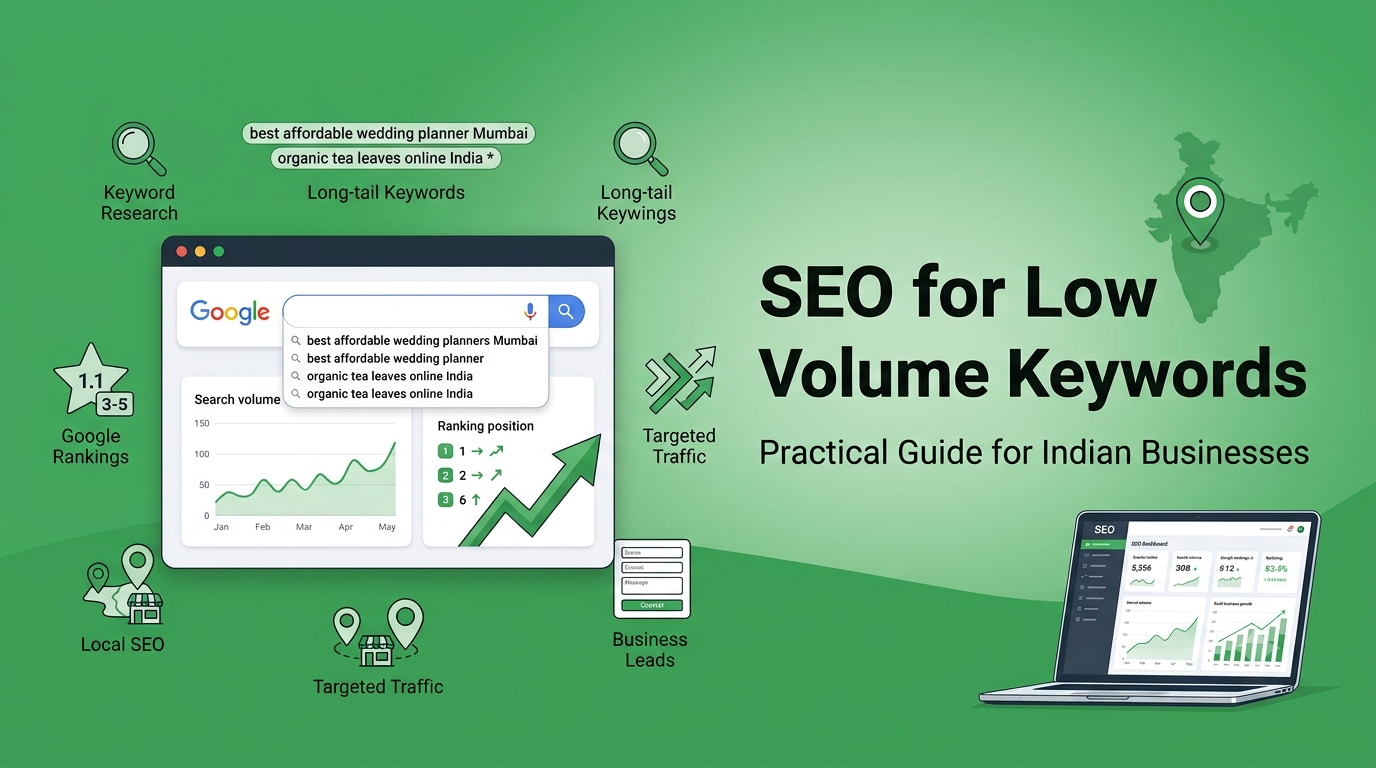
Everyone is talking about SEO today. Whether you run a small shop in Faridabad, a manufacturing unit in Ludhiana, or a service startup in Bengaluru, you want your website on the first page of Google. The reason is simple: page-one rankings bring traffic, and traffic turns into enquiries, calls and sales.
That pressure flows downhill. The business owner pushes the SEO agency, the agency head pushes the SEO team, and the team is expected to deliver rankings quickly.
If you are the SEO executive and your keywords have high search volume, you are lucky. But if you work in a niche with low search volume keywords, you know the struggle. Traffic is limited, conversions look small on paper, and the client keeps asking, “Why are we not getting more leads?”
This guide by Kiefads is written for exactly that situation. It explains how to rank for low volume keywords and, more importantly, how to turn that limited traffic into business.
What Are Low Volume Keywords?
Low volume keywords are search terms that get a small number of searches each month, often under 100 to 500 depending on your industry and tool. Examples:
- “industrial water purifier manufacturer in Faridabad”
- “ayurvedic hair oil wholesale supplier India”
- “custom corrugated box maker near Delhi NCR”
These phrases may look unimpressive in a keyword tool, but they have two big advantages:
- Less competition. Fewer websites target them, so ranking is faster and easier.
- Higher buying intent. A person searching for something this specific usually knows what they want and is close to making a decision.
For many Indian B2B companies, exporters, local service providers and niche product sellers, a few hundred highly targeted visitors are worth far more than thousands of random ones.
Step 1: Build a Strong Website Foundation First
Before you chase any keyword, make sure your website gives Google a reason to trust it. Search engines reward sites that offer real value, so check the basics below.
Is your link profile clean?
Remove or disavow spammy, irrelevant or paid-link-farm backlinks. A few quality links from relevant Indian websites, directories and industry portals beat hundreds of low-quality ones.
Do you have internal linking between pages?
Link related pages to each other using descriptive anchor text. This helps Google understand your site structure and passes authority to important pages.
Is your website updated regularly?
Fresh blogs, product updates and case studies signal that your business is active. A site that hasn’t changed in two years looks abandoned.
Is the search engine crawler visiting your site regularly?
Submit an XML sitemap in Google Search Console, fix crawl errors, and make sure important pages aren’t blocked by robots.txt.
Do you have an SSL certificate?
Your site should load on HTTPS. Browsers flag non-secure sites, which scares away visitors and weakens trust.
Are your title tags and meta descriptions unique and descriptive?
Every page needs its own title and meta description that include the target keyword and give users a clear reason to click.
Is Google Analytics set up correctly?
Without proper tracking, you cannot measure what works. Connect Google Analytics and Search Console, and set up goals for form fills, calls and WhatsApp clicks, which matter a lot in India.
Does your site look trustworthy?
Add a clear About page, a real address, contact numbers, GST or company details where relevant, client testimonials and a privacy policy. Trust directly affects both rankings and conversions.
Also remember that most Indian users browse on mobile. Make sure your site is fast, mobile-friendly and easy to use on a 4G connection.
Step 2: Find the Right Keywords
Once your website is in good shape, research the terms your customers actually use. Choose keywords that:
- Match your products or services closely
- Show buying or enquiry intent
- Reflect how Indians really search, including city names, “near me” phrases, “price”, “manufacturer”, “supplier” and even Hinglish queries like “AC repair kaise karwayein”
Free and paid tools such as Google Keyword Planner, Google Search Console, Google autocomplete, “People also ask” and “Related searches” will help you find them. Also look at what your sales team hears from customers. Real questions from calls and emails often reveal keywords no tool will show.
Step 3: Map Keywords to the Right Pages
Do not stuff every keyword onto one page. Match each keyword to the page that best answers it.
- Short tail or broad keywords (for example, “SEO services”) belong on your home page or main category page.
- Long tail or closely related keywords (for example, “affordable SEO services for small businesses in India”) belong on individual product, service or location pages.
- If no existing page fits a keyword, create a new page for it.
This structure lets you rank for a wide range of searches while giving each page a single, clear purpose.
Step 4: Practical Tips to Rank for Low Volume Keywords
1. Target long tail keywords with a dedicated page
Build one page per long tail keyword, optimized around that exact topic. Put the keyword in the title tag, H1, first 100 words, a few subheadings, the URL and the image alt text, naturally and without stuffing.
2. Use informational keywords to guide users toward transactional pages
Informational queries (“how to choose a solar inverter”) and short tail keywords can be targeted with blog posts and guides. Always link these to your product or service pages with a clear call to action, so readers move from learning to buying.
3. Group related keywords on one page
Low volume keywords add up. A single well-written page can rank for 10 to 20 similar variations, and together they can bring more traffic than one competitive keyword.
4. Write better content than the top results
Search your keyword, read the first page, and ask what is missing. Add real examples, FAQs, pricing guidance, comparison tables, images or videos, and Indian market context such as local regulations, GST, delivery across states and regional needs.
5. Match search intent exactly
If people searching a term want a list of suppliers, don’t give them a long essay. If they want a how-to guide, don’t give them a sales page. Intent match is a major ranking factor.
6. Optimize for local SEO
For businesses serving specific areas, create and fully optimize your Google Business Profile. Add city or locality pages (for example, “Digital Marketing in Gurugram”), collect genuine Google reviews, and keep your name, address and phone number consistent across directories like Justdial, IndiaMART and Sulekha.
7. Build topical authority
Publish a cluster of connected articles around your main subject. For example, a company selling packaging material could write about box types, material grades, printing options and bulk ordering tips, all linked together. Google then sees you as an expert on the topic.
8. Improve click-through rate
When volume is low, every impression counts. Write compelling title tags and meta descriptions, use numbers and benefits, and add schema markup (FAQ, Product, LocalBusiness) so your result stands out.
9. Strengthen your on-page SEO
Use one H1 per page, logical H2/H3 headings, short paragraphs, compressed images, descriptive URLs and fast load times. Check Core Web Vitals in Search Console.
10. Build relevant backlinks
Focus on quality over quantity. Guest posts on industry blogs, listings in genuine business directories, press mentions, supplier and partner websites, and local Indian publications all help.
11. Support content with multiple formats
Add short videos, product demos and infographics. Share them on YouTube, LinkedIn and Instagram, then embed them on your pages to increase engagement and time on page.
12. Track, test and refine
Check Google Search Console every month. Look at which queries bring impressions, which pages have a low CTR, and which keywords sit on positions 8 to 20. Small improvements there can push you onto page one.
How to Handle Client Pressure Over Low Traffic
When search volume is low, the right conversation with your client or boss is about quality, not quantity. Report on:
- Enquiries, calls and form submissions rather than only visits
- Conversion rate by keyword
- Ranking growth for target terms
- Cost per lead compared with paid advertising
If a keyword brings 50 visitors a month and 5 of them become buyers, that is a 10% conversion rate, and it is a very good result. Showing this kind of data helps the business owner understand the real value of niche SEO.
Final Thoughts
Ranking for low volume keywords is not about chasing big numbers. It is about being the best, most trustworthy and most relevant answer for people who are ready to buy. Fix your website’s foundation, choose keywords with real intent, map them to the right pages, and keep improving your content.
If you want expert help with niche keyword research, content strategy or complete SEO for your business, Kiefads is here to help Indian businesses grow on Google, one targeted keyword at a time.
Frequently Asked Questions
Are low volume keywords worth targeting?
Yes. They face less competition, rank faster and often convert better because the searcher’s intent is specific.
How long does it take to rank for low volume keywords?
It varies by competition and site authority, but many low competition keywords start moving within 2 to 4 months of proper optimization.
Should I target short tail or long tail keywords on my home page?
Target short tail or broad keywords on the home page, and use long tail keywords on specific product, service and blog pages.
Can small Indian businesses compete with big brands using low volume keywords?
Yes. Specific, local and niche keywords are where smaller businesses can beat larger competitors.