
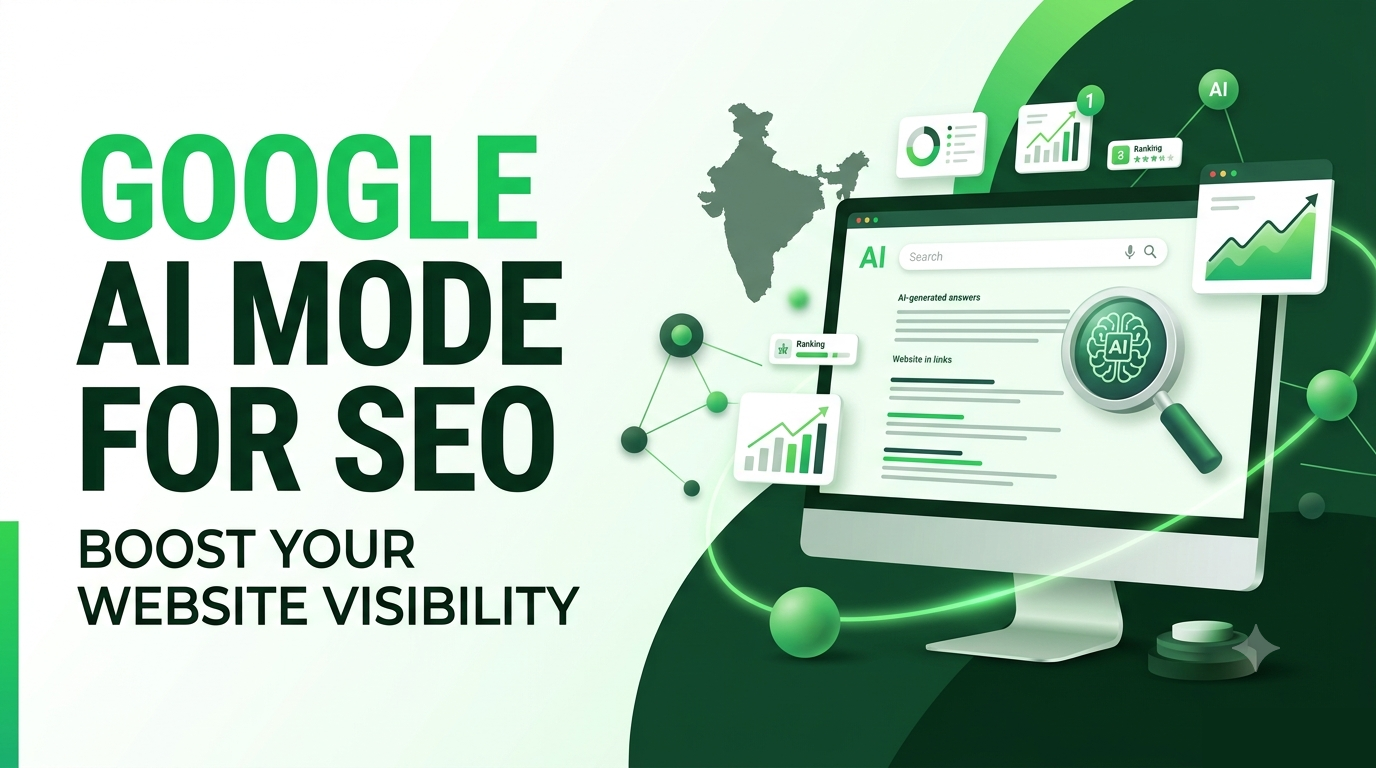
Search in India is changing fast. Instead of scrolling through ten blue links, more users now type or speak a full question and get a direct, AI-generated answer on the results page. This is powered by Google AI Mode, a conversational search experience that gathers information from many sources and answers complex queries in one place.
For Indian businesses, from a Jaipur textile exporter to a Bengaluru SaaS startup, this raises an important question: if fewer people click through to websites, how do you stay visible? The answer is to adapt your SEO strategy to the way AI systems read, understand and summarize content.
This guide explains what Google AI Mode is, why it matters for Indian websites, and how to optimize your site so it shows up in both traditional results and AI-generated answers. It is written by the team at Kiefads, a digital marketing agency that helps Indian brands grow through search, paid media and content.
What Is Google AI Mode?
Google AI Mode is a conversational search feature that uses generative AI to understand a complex query, break it into sub-questions, and deliver one synthesized answer drawn from multiple sources, instead of just a list of ranked links. It supports natural follow-up questions, much like an AI chat tool, while still linking back to the original web pages.
Unlike a standard results page, AI Mode is built for conversation. A user can ask something broad, such as “best laptop for a college student under ₹60,000”, read the summary, and then follow up with “which one has better battery life?” For website owners, visibility no longer depends only on ranking well. It also depends on being cited, referenced or pulled into these AI-generated answers.
Why Google AI Mode Matters for SEO in India
Traditional SEO focused on ranking position: reaching page one, ideally the top three. AI Mode adds a new layer. Your content must be chosen as a trustworthy source that an AI system is willing to summarize or cite.
This matters especially in India for several reasons:
- Mobile-first, voice-friendly users. A large share of Indian internet users search on smartphones, and many use voice. Voice queries are longer and more conversational, which is exactly the format AI Mode handles best.
- Multilingual search behavior. Indians search in English, Hindi, Hinglish and regional languages such as Tamil, Telugu, Marathi, Bengali and Gujarati, often mixing them in one query.
- Citations count, not just clicks. A brand can appear inside an AI-generated answer even without holding the number one position.
- Quality signals carry more weight. AI systems favor content that is clear, well structured and demonstrably trustworthy.
- High-intent local queries. Searches like “best CA in Pune for startups” or “affordable interior designer in Hyderabad” depend heavily on local trust signals.
Businesses that only chase old-style keyword rankings risk becoming invisible in this new format.
How Google AI Mode Is Changing Search Behavior
Search intent used to be inferred from short keyword strings like “SEO agency Mumbai”. With AI Mode, users ask full questions: “which is better for a small business in Mumbai, SEO or Google Ads?” They expect a direct, useful answer.
Practical implications for website owners:
- Content must answer specific questions clearly, not just target broad keywords.
- Pages that explain “how”, “why” and “which is best for X situation” tend to perform better in AI-driven results.
- Structured content (lists, tables, clear headings) is easier for AI systems to extract and summarize accurately.
- Queries increasingly include context: budget in rupees, city, business size and timeline. Your content should address these situations directly.
How to Optimize Your Website for Google AI Mode
Optimizing for AI Mode is not a separate discipline. It builds on strong SEO fundamentals and adds a few AI-specific practices.
1. Strengthen E-E-A-T (Experience, Expertise, Authoritativeness, Trustworthiness)
Google’s quality guidelines emphasize E-E-A-T, and it matters even more when AI systems decide which sources to trust and cite.
Practical steps:
- Publish content written or reviewed by people with real, demonstrable knowledge of the subject.
- Add author bios with credentials, and keep a detailed “About Us” page with your company story, team and registration details (such as GST or CIN where relevant).
- Back claims with data, case studies, examples or verifiable sources instead of vague statements.
- Display real client testimonials, certifications, awards and media mentions.
- Keep information current. This is critical for topics such as tax, finance, health and regulation, where rules change often.
- Make contact details, a privacy policy, and refund or terms pages easy to find.
A site that clearly shows who is behind the content, and why they are qualified, is more likely to be treated as reliable by both the classic algorithm and AI-driven search.
2. Optimize for AEO (Answer Engine Optimization)
AEO focuses on structuring content so it can be pulled directly into AI answers, voice responses and featured snippets.
- Answer the core question in the first one or two sentences of each section, then expand.
- Use clear H2 and H3 headings that mirror real user questions.
- Break processes into numbered steps and comparisons into bullet points or tables.
- Avoid burying the answer under long introductions.
- Add a short FAQ section to key pages, using the exact phrasing people use.
Notice that each section of this article opens with a direct answer. That is the pattern AI systems look for.
3. Optimize for GEO (Generative Engine Optimization)
GEO extends AEO to generative tools such as Google’s AI-powered search, AI Overviews and other conversational engines.
- Write in a natural, conversational tone that mirrors how people ask questions.
- Cover a topic comprehensively on one page rather than splitting it into many thin articles.
- Implement structured data (schema markup): Article, FAQPage, HowTo, Organization, LocalBusiness, Product and Review schema, where relevant.
- Include comparisons, pros and cons, and “best for” explanations, which generative engines summarize well.
- Use original data, such as surveys, pricing benchmarks and case results. Unique information gives AI systems a reason to cite you.
- Define key terms clearly so your page works as a reference.
4. Get the Technical Foundations Right
AI systems can only use content they can access and understand.
- Core Web Vitals and speed. Optimize for fast loading on 4G and mid-range Android devices, which is how much of India browses.
- Mobile-first design with readable text and tap-friendly buttons.
- Crawlability. Keep a clean XML sitemap, sensible robots.txt, and no important content hidden behind scripts.
- HTTPS, clean URLs and logical internal linking so related topics connect.
- Image optimization with descriptive alt text and compressed formats.
5. Go Multilingual and Regional
India’s search market is not English-only. If your audience includes Hindi or regional-language users, consider publishing localized pages with natural phrasing (not machine-translated text), using correct hreflang tags, and targeting Hinglish queries where they are common. Regional-language content faces less competition and can win AI citations more easily.
6. Strengthen Local SEO for Indian Cities and Regions
Local SEO remains essential. AI Mode still leans on local signals when a query has local intent, such as “digital marketing agency near me” or “SEO company in Bengaluru”.
- Keep your Google Business Profile complete, accurate and updated with services, photos, posts and working hours.
- Use location terms naturally in service pages, for example “performance marketing agency in Mumbai”, only where it reflects your real service area.
- Collect genuine customer reviews and reply to them. Review signals influence local rankings and AI-generated recommendations.
- Keep your NAP (name, address, phone) consistent across directories such as Justdial, Sulekha, IndiaMART and industry listings.
- Build city-specific landing pages with real local content, not duplicated text with only the city name swapped.
7. Build Brand Mentions and Authority Beyond Your Website
AI systems learn from the wider web. Earn mentions through guest posts on reputable Indian industry sites, press coverage, podcasts, expert quotes, and active profiles on LinkedIn, YouTube and Quora. Consistent brand visibility strengthens trust signals.
Practical Examples of AI Mode Optimization
A furniture brand in Jaipur. Instead of a generic “Our Products” page, create “Which sofa material is best for hot and humid weather in India?” Give the direct answer first, follow with bullet points comparing fabric, leather and rexine, add price ranges in ₹, and show real product examples.
A physiotherapy clinic in Pune. Build an FAQ page answering “What should I expect during a first physiotherapy session?” with a two-line direct answer, then step-by-step detail, appointment information and FAQ schema.
A fintech startup in Bengaluru. Publish a comparison page, “Current account vs savings account for small businesses in India”, with a clear summary, a comparison table and a recent update date.
In each case the structure serves human readers and AI summarization equally well.
SEO vs Google Ads: Which Should You Choose in India?
Once you understand how visibility works in AI-driven search, the next decision is where to invest. Each channel has its own strengths.
| Factor | SEO | Google Ads |
|---|---|---|
| Cost | Lower ongoing cost, but needs time investment | Pay-per-click; costs rise with competition and budget |
| Speed of results | Gradual; typically 3–6 months for meaningful traction | Immediate visibility once campaigns go live |
| ROI over time | Compounding; often more cost-efficient long term | Strong short-term ROI, but stops when spend stops |
| Long-term growth | Builds lasting authority and organic traffic | Growth tied directly to continued ad spend |
| Scalability | Scales with content and authority | Scales quickly with budget, at rising cost |
| Lead generation | Steady, intent-driven leads | Fast leads, useful for immediate demand |
| Best suited for | Sustainable, long-term visibility | Quick visibility or testing demand |
When to Choose SEO
SEO suits businesses that want sustainable visibility without paying for every click. It works well for companies willing to invest in content, technical optimization and authority over several months. A well-optimized site, one that also matches AI Mode’s preference for clear, trustworthy content, can keep generating traffic and leads long after the initial work is done. Businesses that want this depth without building an in-house team often work with an experienced SEO agency in India, since local expertise helps align content with how Indian users actually search.
When to Choose Google Ads
Google Ads is the right choice when you need visibility now: a product launch, a festive-season sale (Diwali, Navratri, Big Billion Days-style events) or a test of demand for a new service. The trade-off is that visibility stops when spending stops. Because campaign setup and bidding directly affect cost per lead, many businesses hire a specialist Google Ads agency in India rather than learning through expensive trial and error.
When to Use Both Together
Many businesses get the strongest results from combining both. Google Ads brings leads while SEO builds momentum in the background. As organic rankings improve, ad spend can be adjusted more strategically. The combined approach also boosts brand presence across organic results, paid listings and AI-generated summaries.
Choosing the Right Digital Marketing Partner in India
With SEO now overlapping with AEO, GEO and evolving AI search behavior, many Indian businesses prefer a specialized team over managing everything in-house. When evaluating a digital marketing company in India, look for:
- A transparent strategy, not vague promises of “guaranteed #1 rankings”.
- Experience across organic SEO and paid channels, since most businesses need both at different stages.
- Familiarity with AEO, GEO and AI search, not just traditional keyword work.
- Local market understanding, including regional languages, city-level targeting and Indian buyer behavior.
- Clear reporting tied to business outcomes such as leads, calls and sales, not only traffic.
Businesses focused on adapting to AI Mode should also look for an AI SEO agency in India that understands both classic SEO and generative-answer optimization. If you are pairing SEO with social media marketing, make sure the two work together. Consistent messaging across search and social strengthens brand trust and supports stronger E-E-A-T signals over time.
Kiefads works with businesses across India on SEO, paid campaigns and broader digital marketing strategy, helping them decide how organic and paid channels fit together based on their goals, budget and market.
Quick Checklist: Is Your Website Ready for AI Mode?
- ☐ Author bios, credentials and a detailed About page
- ☐ Direct answers in the first 1–2 sentences of each section
- ☐ Question-based H2/H3 headings
- ☐ Tables, bullets and numbered steps where useful
- ☐ FAQ sections with FAQPage schema
- ☐ Organization and LocalBusiness schema
- ☐ Fast, mobile-friendly pages
- ☐ Complete, active Google Business Profile
- ☐ Consistent NAP across Indian directories
- ☐ Fresh content with visible update dates
- ☐ Regional-language or Hinglish content where relevant
- ☐ Brand mentions on reputable external sites
Ready to make your website work harder in the AI search era? Connect with Kiefads to find out whether SEO, Google Ads or a combined strategy fits your business goals best.
Frequently Asked Questions
1. What is Google AI Mode in simple terms?
Google AI Mode is a search feature that uses generative AI to answer complex queries directly on the search page, combining information from multiple websites into one conversational response instead of just listing links.
2. Does Google AI Mode replace traditional SEO?
No. AI Mode builds on the same foundation as traditional SEO (quality content, technical health and trust signals) and adds new priorities such as clear answer structure and strong E-E-A-T.
3. How is AEO different from regular SEO?
Regular SEO focuses on ranking a page for search queries. AEO (Answer Engine Optimization) focuses on structuring content so AI systems, voice assistants and featured snippets can extract it directly as an answer.
4. What is GEO (Generative Engine Optimization)?
GEO is the practice of making your content easy for generative AI tools to understand, trust and cite, through comprehensive coverage, structured data, original insights and clear, conversational writing.
5. Is local SEO still important with AI-driven search?
Yes. Local-intent queries, such as a nearby service provider in your city, still rely heavily on Google Business Profile accuracy, reviews and location-specific content, even within AI-generated results.
6. Does my website need Hindi or regional-language content?
If your target customers search in Hindi or regional languages, yes. Well-written localized content can reach audiences your English pages miss, and it often faces less competition.
7. Should a small business in India choose SEO or Google Ads first?
It depends on timeline and goals. If you need quick leads, start with Google Ads. If you want sustainable, lower-cost growth, prioritize SEO. Many businesses eventually use both.
8. How long does SEO take to show results in India?
Most businesses see meaningful traction in about 3–6 months, depending on competition, the website’s current state and the consistency of content and optimization work.
Conclusion
Google AI Mode is a meaningful shift in how Indians search and how businesses need to think about visibility. It does not replace SEO fundamentals. It rewards websites that are clear, well structured, genuinely useful and backed by real expertise. Whether you choose SEO, Google Ads or a mix depends on your timeline, budget and long-term goals, not a single “correct” answer.
If you want to adapt your strategy for this new search landscape, working with a team that understands both the technical and content sides of modern search can help. Kiefads helps Indian businesses evaluate their current approach and build a strategy suited to their market and goals.